Branding vs Marketing: What’s the Difference for Small Businesses?
If you run a small business, you have probably used the words “branding” and “marketing” as if they mean the same thing. They do not. The difference between branding and marketing is simple once you see it clearly: branding is who you are, marketing is how you tell people about it. Mixing the two up is one of the most common reasons small business growth feels slow even when the owner is working hard every day.
Quick Answer
Branding is the identity of your business: your name, your visual look, your tone, and the feeling customers get when they think of you. Marketing is the set of actions you take to promote your products or services and reach the right audience. Branding shapes perception. Marketing drives action. A business needs both to grow in a way that lasts.
Table of Contents
- What Is Branding?
- What Is Marketing?
- Branding vs Marketing: Key Differences
- Why Small Businesses Confuse the Two
- How Branding and Marketing Work Together
- Common Mistakes Small Businesses Make
- Action Checklist
- Key Takeaways
- FAQs
What Is Branding?
Branding is everything that shapes how people perceive your business. It includes your logo and colours, but it goes far beyond design. Branding covers your tone of voice, your values, the promise you make to customers, and the experience someone has every time they interact with you. A well-known guide from the U.S. Small Business Administration’s partner network describes branding as the long-term work behind customer loyalty and recognition, separate from any single campaign or advertisement.
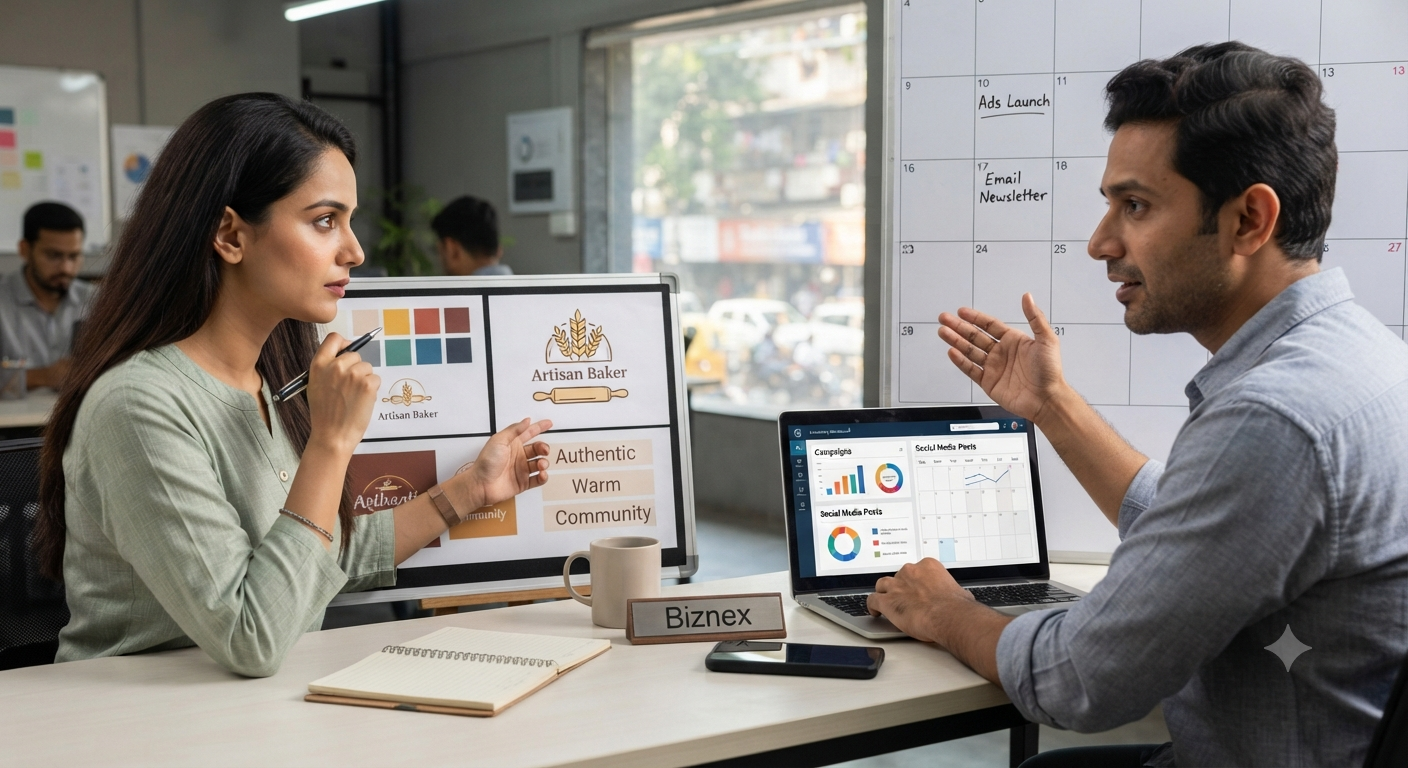
Think of branding as the personality of your business. It answers questions like: What do we stand for? Who are we trying to serve? What should someone feel after working with us? A local bakery that feels warm, honest, and consistent has strong branding, even without a big advertising budget.
What Is Marketing?
Marketing is the activity of promoting and selling your products or services. According to the American Marketing Association, marketing includes the full set of processes involved in creating, communicating, and delivering value to customers. In practical terms for a small business, that means your social media marketing, Google Ads, WhatsApp campaigns, email newsletters, and offline promotions.
Marketing is measurable and time bound. A campaign has a start date, an end date, a budget, and a result: leads, calls, or sales. Marketing brings people to your door. Branding decides whether they trust what they find once they arrive.
Branding vs Marketing: Key Differences
| Aspect | Branding | Marketing |
|---|---|---|
| Purpose | Shapes identity and perception | Drives visibility and sales |
| Timeline | Long term, ongoing | Short to medium term, campaign based |
| Focus | Who you are | What you are offering right now |
| Measurement | Trust, recognition, loyalty | Leads, clicks, conversions, revenue |
| Examples | Logo, tone of voice, values, customer experience | Google Ads, social posts, email campaigns, offers |
| Changes how often | Rarely | Constantly, based on goals and season |
Why Small Businesses Confuse the Two
Most small business owners are juggling everything at once, so it is natural for these terms to blur together. A few common reasons for the confusion:
- A new logo or website redesign feels like “marketing” because it is visible and exciting.
- Agencies sometimes bundle branding and marketing into one package, which makes them feel like one activity.
- Small business owners rarely have a dedicated brand strategist, so branding decisions get made inside marketing conversations by default.
- Results from marketing show up fast. Results from branding show up slowly, so owners undervalue it.
How Branding and Marketing Work Together
Branding and marketing are not competing priorities. They are sequential. Branding should come first because it defines the message, tone, and visual identity that every marketing campaign will use. Without that foundation, marketing tends to feel inconsistent from one platform to another.
Once branding is defined, marketing puts it in front of the right audience through the right channels, whether that is search engine optimisation to be found on Google, or paid campaigns through performance marketing to generate leads quickly. A strong brand also makes marketing cheaper over time, because people already recognise and trust you, so campaigns convert better.
Common Mistakes Small Businesses Make
- Running ads before defining the brand. This leads to campaigns that generate clicks but confuse or fail to convert visitors once they land on an inconsistent website.
- Changing the logo or tone every few months. Frequent changes reset the recognition you have built and make the business feel unstable.
- Treating social media only as a sales channel. Social platforms are also where your brand personality gets seen daily, not just where offers get posted.
- Copying a competitor’s look without a clear reason. This creates a brand that has no distinct position in the customer’s mind.
- Expecting marketing to fix a weak brand. No campaign performs well for long if the underlying business identity feels unclear or forgettable.
Action Checklist: Getting Branding and Marketing Right
- ☐ Write down your business’s core promise in one sentence
- ☐ Define your tone of voice: formal, friendly, expert, playful
- ☐ Lock your logo, colours, and fonts before running any paid campaign
- ☐ Audit your website and social profiles for consistency
- ☐ Set clear, measurable goals for every marketing campaign
- ☐ Review brand consistency every quarter, not every campaign
Key Takeaways
- Branding is your identity. Marketing is your activity. Both are necessary, but they serve different jobs.
- Branding should be defined before marketing campaigns launch, not built alongside them.
- A strong brand makes every marketing rupee work harder because trust is already established.
- Small businesses that treat branding as a one-time task usually see inconsistent results from their marketing spend.
Conclusion
The difference between branding and marketing comes down to identity versus activity. Branding is the foundation. Marketing is what you build on top of it. Small businesses that get this sequence right spend less to get better results, because their audience already knows what to expect before a single ad is shown. If your marketing has felt inconsistent or expensive lately, it is worth checking whether your branding foundation is actually solid, or whether it has been skipped entirely. For a broader look at how the different pieces of digital growth fit together, see our guide on the 7 areas of digital marketing every business owner should know.
Frequently Asked Questions
1. What is the main difference between branding and marketing?
Branding is the identity of your business: your values, tone, and visual look. Marketing is the activity of promoting your products or services to reach customers and drive sales.
2. Should a small business build its brand before marketing?
Yes. Branding should come first so every marketing campaign, from social media to Google Ads, uses a consistent message and visual identity from day one.
3. Can a small business survive with good marketing but weak branding?
It can generate short-term leads, but conversions and repeat customers usually suffer because a weak brand fails to build lasting trust.
4. How much should a small business spend on branding versus marketing?
Branding is usually a one-time or occasional investment, while marketing needs an ongoing monthly budget. Many small businesses in India start with a modest branding setup and a scalable monthly marketing budget that grows with results.
5. Is a logo the same as a brand?
No. A logo is one visual piece of a brand. The full brand includes tone of voice, values, customer experience, and consistency across every touchpoint.
6. How often should a small business update its branding?
Rarely, unless the business has genuinely changed direction. Frequent rebranding resets customer recognition and can hurt trust rather than help it.
7. What comes first, branding or marketing strategy?
Branding comes first. A marketing strategy without a defined brand tends to produce inconsistent messaging across channels.
8. Does branding help SEO and marketing performance?
Yes. A recognisable, trusted brand improves click-through rates on search results and ad performance, which lowers the cost of both SEO and paid marketing over time.
Written by the team at Biznex, a digital marketing agency based in Borivali, Mumbai. We work with small businesses on branding, SEO, social media, and performance marketing.
Follow Biznex: Instagram | Facebook | LinkedIn | YouTube
References: American Marketing Association, U.S. SBA-affiliated guide to small business branding.